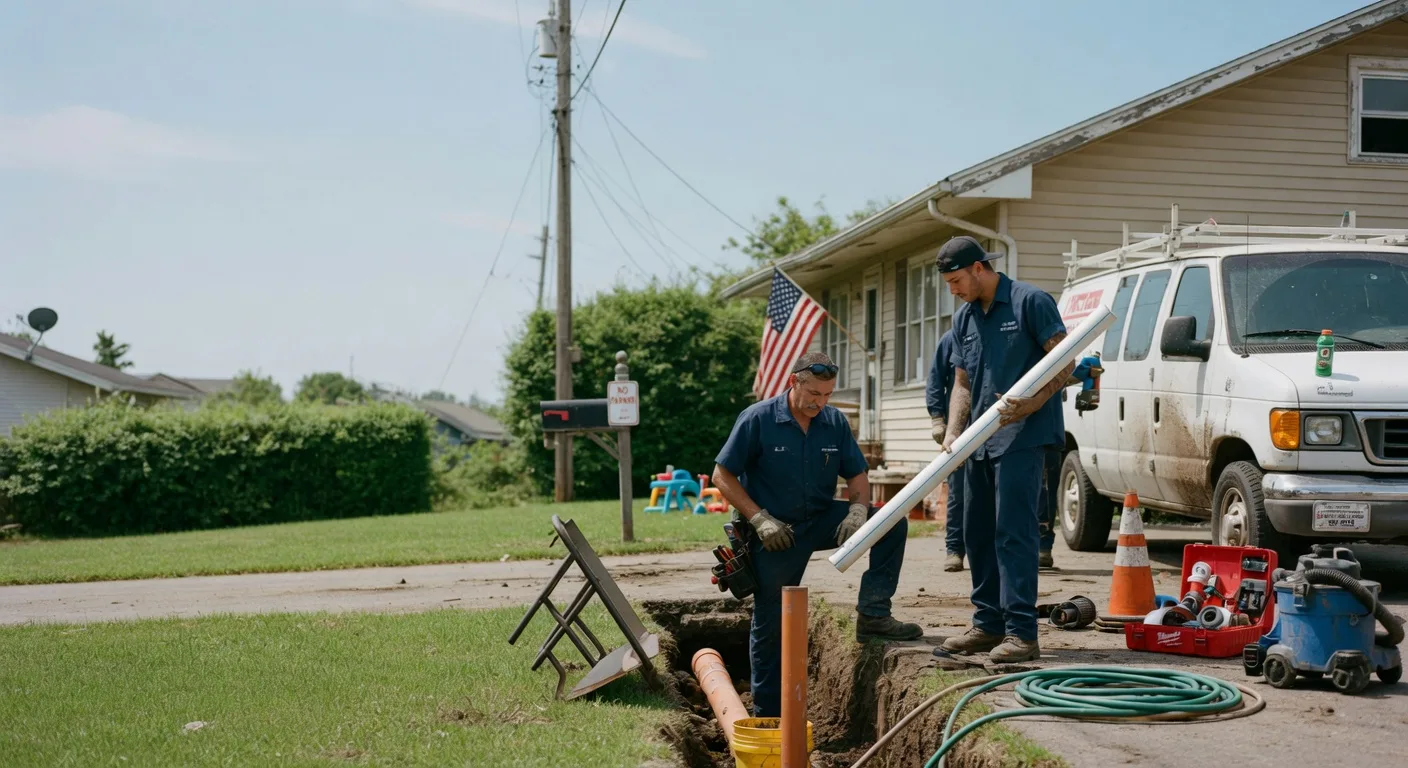
Why does my basement floor drain back up when it rains?
A floor drain that backs up when it rains is usually not a clog in the drain itself. It means the sewer line outside the house is full, and the water has nowhere to go but up through the lowest opening, which is your basement floor.
Heavy rain can push extra water into the main line through cracked joints, root intrusion at a clay joint or a failed sewer lateral. The line fills, and the floor drain shows it first.
Safe homeowner check: on a dry day, pour a bucket of water into the floor drain and see if it runs away normally. Keep stored items off the floor, and do not run the washer, showers or dishwasher during the storm.
Stop running water and call now if sewage is rising, the smell is strong, or every drain in the house is gurgling or backing up. That points to the main line, not one fixture.
A cable machine can clear roots or grease when a blockage is the cause. If the line keeps filling in wet weather, a camera inspection is the next step, because it shows whether the pipe is cracked, bellied or breached. Hydro jetting washes the pipe wall once the cause is known. Cost depends on access, how much has to be opened up, the materials involved and any permit requirement.
Expert Plumbers Co is a referral service. Call (380) 262-9173 and we will connect you with a plumber serving Red Jacket, WV for Emergency Drain Cleaning or a camera inspection.
Pay attention to how fast the drain responds, because it tells you how serious the cause is. If the water rises within minutes of a downpour starting and drops soon after it ends, the line is being overloaded by water entering through cracks or joints. If it stays up for hours after the rain stops, something is also holding water in the pipe, such as a belly or a root mass. Older homes often have clay or cast iron lines with many joints and sometimes a downspout or foundation drain connected to the sewer, which makes wet-weather backups more likely. Newer homes with plastic pipe usually have fewer joints, so a backup there points more strongly to a blockage or a municipal main running full. Tell the plumber when the backups began, how heavy the rain was, and whether any gutters or sump discharge are tied into the house drains. Once the cause is fixed, the floor drain should stay quiet through storms.
Small flies keep coming out of the drain. Is that a clog?
Possibly, but not always. Small flies rising out of a drain are drain flies. They breed in the organic film that coats the inside of the trap and the first few inches of pipe, not in clean standing water. The film is the nursery.
A slow or partly blocked drain gives that film somewhere to sit, which is why flies and a slow drain often show up together. A drain nobody uses is a different case. When its trap dries out, flies and sewer odor both come straight up the pipe.
Safe homeowner check. Tape a card or a clear bag over each suspect drain overnight. Flies on the underside show which one they come from. Clean the strainer and the visible part of the drain. On a rarely used drain, pour in a bucket of water to refill the trap.
A cable machine is enough when one fixture is slow and no flies are involved. A cable only cuts a channel through the blockage and leaves the film on the pipe wall. A line that keeps producing flies after cleaning usually needs hydro jetting, which strips the wall back to bare pipe.
One fixture is a local job. Flies plus several slow drains point further down the line: grease build-up on the pipe wall, a bellied section holding water, or root intrusion at a joint. That calls for a camera inspection before anyone picks equipment.
Stop running water and call if drains gurgle, sewage odor fills the room, or water rises in the lowest fixture.
Expert Plumbers Co is a referral service. We refer homeowners in Red Jacket, WV to an independent local plumber for Drain Cleaning. Call (380) 262-9173.
The choice of cleaner matters. Bleach poured down the drain kills flies on contact but leaves the film they feed on, so they return within days. Boiling water helps on metal pipe but can soften or loosen joints on some plastic, so use hot tap water. A stiff brush on the strainer area and the first few inches of pipe does more than any liquid. An enzyme cleaner left overnight can digest the film, but treat it as upkeep, not a cure for a blocked line.
Check the overflow opening on sinks and tubs too. That channel is rarely cleaned and can breed flies.
Adult drain flies are weak fliers and rest on walls near the source, so counting them each evening shows whether cleaning is working. If the numbers do not fall within a week of thorough cleaning, the source is deeper in the line, or in a seldom-used floor drain in a basement or utility room that nobody thinks about.
We had roots cut out of our sewer line a year ago and now it is backing up again. What actually stops them coming back?
Cutting does not stop roots. It clears the pipe so water can pass, but the roots are still alive outside it and they grow back through the same opening. A year is a fairly typical time for a line to fill up again, and sometimes it is faster.
Roots get in where the pipe is not sealed: a joint that has shifted, a hairline crack, a broken section. Tree roots follow moisture, and a sewer pipe leaks a little water and vapor, which draws them in. As long as the entry point is open, regrowth is only a matter of time.
What actually removes the cause is closing that opening. There are three common routes, and the right one depends on what a camera inspection shows.
A spot repair fixes a single bad joint or short cracked section. It makes sense when the rest of the pipe is sound.
A liner is a resin-saturated sleeve that is cured inside the old pipe, sealing joints and cracks along its length. It suits pipes that are cracked or leaking at several joints but are still round and in place.
Replacement is the answer when the pipe is collapsed, badly offset, bellied or made of a material that has failed, such as clay in poor shape.
Chemical products poured into the line, or foaming treatments, may slow some regrowth but do not seal the entry point, so they are not a repair.
Safe checks you can do:
Note when the slow drains started and which fixtures are affected. Mention the earlier root cutting to the plumber, and the approximate date.
Stop running water and call now if sewage is backing up into the house.
If a full repair is not possible right away, scheduled cleaning before the next backup can manage the problem, though it stays a stopgap. Cost depends on how many entry points there are, depth and length, access around trees and hardscape, the method chosen and permits under local code. To be connected with an independent local plumber in Red Jacket, WV, call Expert Plumbers Co on (380) 262-9173.
What should I clear out or get ready before the plumber arrives to unclog my drain?
A little preparation saves time at the door and often means a cleaner, faster job. Most of it takes ten minutes.
Start with access. If the clog is in a sink, empty the cabinet underneath. Plumbers need to reach the trap and the wall pipe, and stored cleaning products tend to be in the way. Put a bucket and some old towels nearby. If the problem is a tub or shower, remove the rugs and anything sitting on the edge.
If the problem might be in the main line, find the cleanout. It is a capped pipe, often three or four inches across, in a basement, a crawlspace, a garage wall, or outside near the house. Clear a path to it. Move boxes, shelves and stored items, and trim back any plants hiding an outside one. If you cannot find it, tell the plumber. Do not try to unscrew an old cap with a hammer.
Pets matter more than people expect. A cable machine is loud, doors will be open, and an anxious dog or a cat slipping into a crawlspace is a real problem. Put animals in a closed room or a different part of the house.
Next, write a short list of which fixtures are affected. For example: the kitchen sink is slow, the downstairs shower gurgles, the toilet is fine. Add when it started and whether it happens only when the washer runs or when it rains. That list tells the plumber whether to look at a branch line or the main line before anyone touches a tool.
Also stop doing a few things. Do not pour chemical drain cleaner in before the visit, since it can burn skin and make the pipe unsafe to work on. If you did already, tell the plumber what you used.
Finally, if water is coming up through a floor drain or toilet right now, stop running water in the house and keep children and pets away from it. Call straight away rather than waiting to tidy up.
Cost depends on access, so a clear path to the pipe can help keep the visit short.
If you need a drain cleared in Red Jacket, WV, Expert Plumbers Co can connect you with an independent local plumber at (380) 262-9173.
We live in a manufactured home. Why do the drains under the floor keep clogging?
You live in a manufactured home, and the drains keep clogging. A sink runs slow, the tub gurgles, or the toilet backs up every few months. The cause is usually under the floor, where you cannot see it.
Drain lines in a manufactured home run through the belly wrap, between the floor framing and the ground. The runs are long and shallow, with very little fall, so water and solids move slowly and grease, soap and paper settle. Over time the hangers that hold the pipe can fail and the line sags. A sagging section becomes a bellied line that holds water and collects debris. Lightweight plastic pipe can also crack or pull apart at joints when the ground shifts.
Cold weather adds a problem. Pipes under the floor can freeze, and a frozen drain looks like a clog until it thaws. Roots can also reach the outside section where the home ties into the sewer.
One slow fixture is usually a branch or trap problem near that fixture. If sinks, tub, toilet and washer all slow down together, or water comes up in the lowest fixture, the main run under the home or the sewer connection is the likely spot.
Safe homeowner check: Run each fixture one at a time and note which are slow. Look for a cleanout outside near the home and see whether it holds water, without opening it under pressure. Do not crawl under the home if it is wet or smells of sewage.
Stop running water and call now if sewage is coming up inside, if water drips from the belly wrap, if the floor feels soft, or if the smell of sewage is strong under or around the home.
A cable machine is often enough for a soft clog in one branch. Hydro jetting is the better tool for build-up on the wall of a long, shallow run. A camera inspection is the right step when clogs keep returning, because it can show a sag, a cracked joint or a separated pipe.
Expert Plumbers Co is a referral service. We connect you with an independent local plumber in Red Jacket, WV. Call (380) 262-9173.
Ask the plumber how they will reach the pipe and whether the belly wrap has to be opened and resealed. The scope depends on access under the home, how much belly board or insulation comes off, the pipe material, whether hangers need replacing to restore the slope, and any permit or code requirement.